
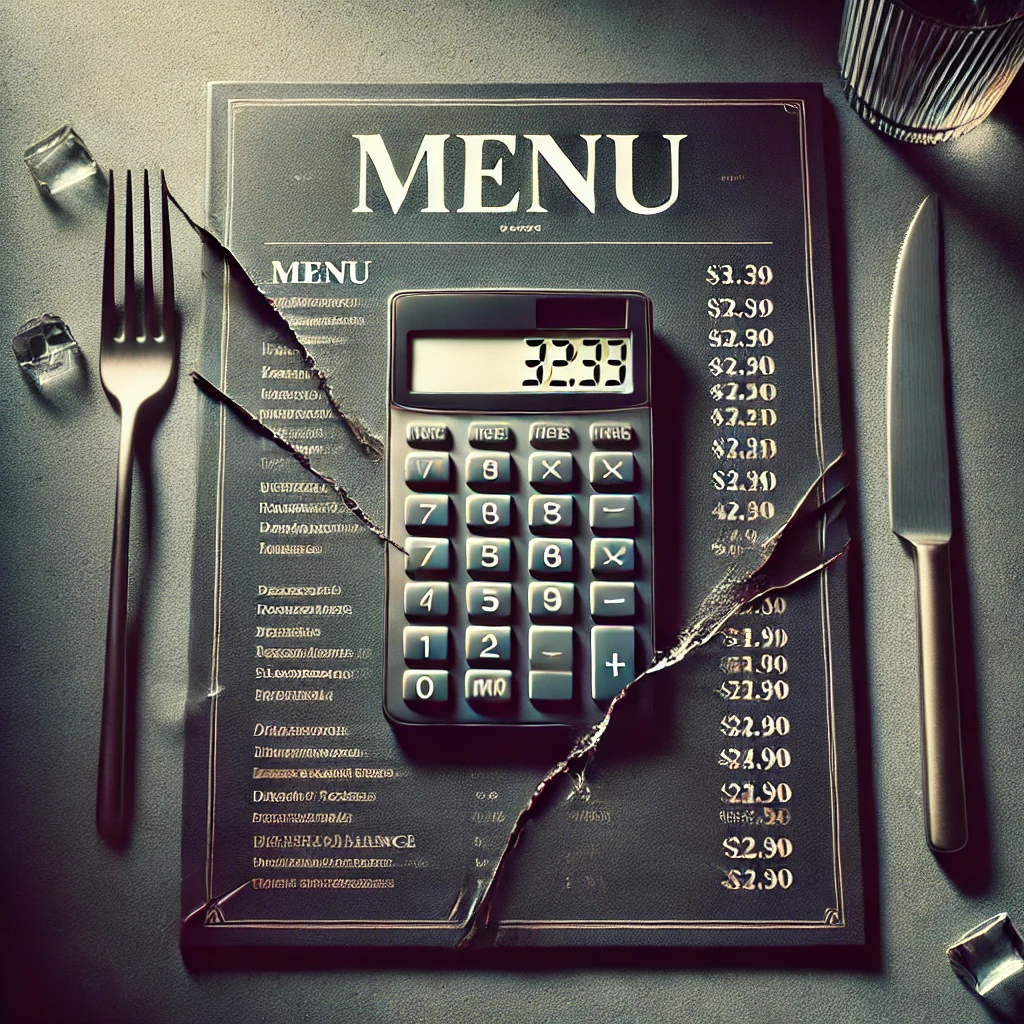
For much of the industry, restaurant pricing has followed a familiar, comfortable logic. A dish costs a certain amount to produce, so you apply a standard markup—two, maybe three times the base cost—and land on a price. It’s simple, defensible, and easy to apply across a menu. This model, known as cost-plus pricing, is still the dominant approach in many kitchens today. It’s long been seen as rational and consistent—a way to protect margins without overcomplicating the process.
But as guest behavior evolves, and as operators face greater pressure to grow revenue without alienating their audience, the limits of this approach are becoming harder to ignore.
Cost-plus pricing assumes that guests make decisions based on logic. That they evaluate options with some understanding of what things should cost and how value is derived. But in practice, very few guests approach a menu that way. They don’t see your food costs. They don’t weigh markup percentages. Instead, they navigate the menu based on perception—what seems exciting, what feels fair, what appears premium or safe. And all of those judgments are shaped by context: where the item is placed, how it’s described, how it compares to its neighbors, and even what section it appears in.
A pricing strategy that doesn’t consider any of that context can easily lead to missed opportunities. A high-quality dish might be priced out of reach—not because of its actual value, but because it sits awkwardly next to a more “affordable” option that looks like a smarter choice. A high-margin item might fail to gain traction simply because it’s presented without contrast or emphasis. Meanwhile, items with lower profitability can dominate orders because they appear more approachable, even if they quietly drag down the average check.
These patterns are rarely caught on a spreadsheet. Cost-plus pricing treats each dish as a siloed entity, rather than part of a broader system of decision-making. It prioritizes internal logic—what works for the business—without fully accounting for guest logic, which is often emotional, relative, and fast-moving.
That’s where the MOM360° system begins to diverge from conventional methods.
Rather than anchoring prices to ingredient costs alone, MOM360° applies a more nuanced strategy. It considers guest psychology, item visibility, competitive placement, and real-time performance data to build a pricing structure that doesn’t just maintain margins—it actively guides behavior. The goal isn’t just to make items profitable on paper. It’s to make them feel like the right choice in the moment a guest is making a decision.
This involves more than simply identifying bestsellers or high-margin items. MOM360° looks at how dishes function in relation to one another. Which item anchors the category? Which dish carries perceived value, and which one offers contrast? Where does the guest look first? Where do they hesitate? What’s skipped entirely? These are subtle dynamics, but they have real business impact—often translating into dollars lost or gained per check, across hundreds or thousands of transactions.
Importantly, MOM360° doesn’t lock operators into static pricing schemes. It’s designed to adapt to seasonality, performance shifts, market conditions, and evolving guest behavior. It isn’t just a framework—it’s a living system, one that allows pricing to evolve without compromising the larger experience or operational flow.
Pricing isn’t just a finance decision. It’s a guest experience decision. It’s part of how people understand your brand, engage with your food, and decide whether they’ll come back. When it’s approached with the same care and strategy as menu design or service training, pricing becomes a tool for growth—not just protection.
Cost-plus pricing isn’t inherently wrong. It’s simply incomplete. And in a world where competition is fierce, attention is scarce, and expectations are high, incomplete strategy is a luxury most restaurants can’t afford.