How to sell the right item by showing the wrong one.
Not everything on your menu is meant to be chosen. Some items are there to make others look better.
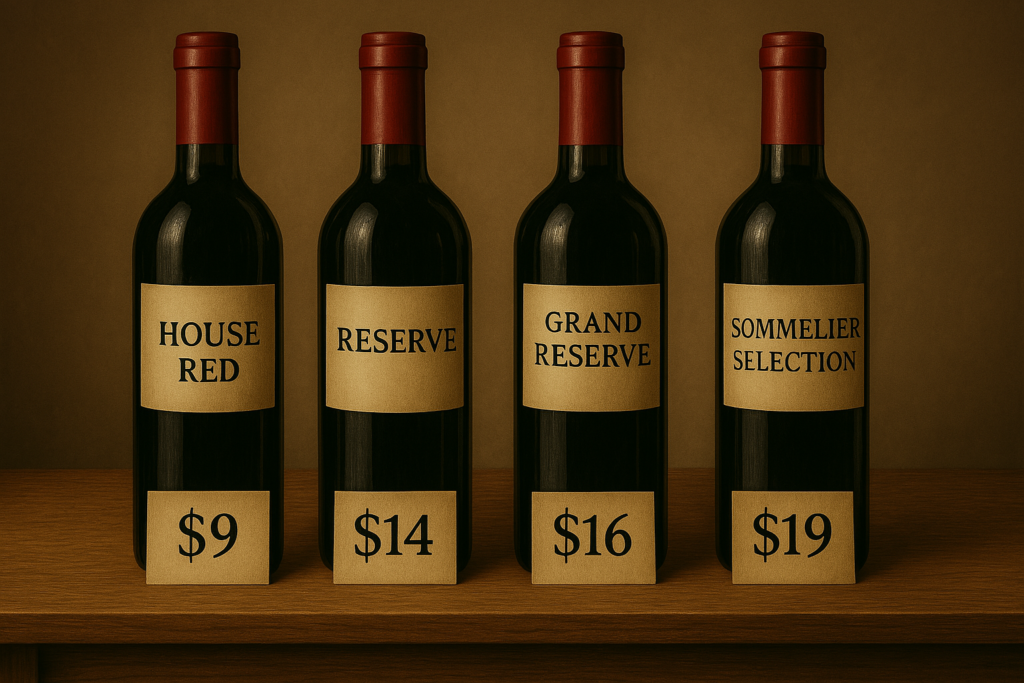
That’s the idea behind the Decoy Effect—an elegant principle from behavioral economics that shapes decision-making through context. First studied in the 1980s by marketing researchers Joel Huber, John Payne, and Christopher Puto, the Decoy Effect (also known as asymmetric dominance) revealed a strange but consistent behavior: when a third, slightly worse option is introduced, people become more likely to choose the “target” item it’s meant to support. The decoy doesn’t exist to sell—it exists to steer.
Take a steak menu, for example. A $53 ribeye might seem like a splurge—until it’s placed next to a $135 tomahawk. Suddenly, the ribeye feels smart. It’s no longer the most expensive option—it’s the savvy one. Guests aren’t calculating value in isolation. They’re comparing, reacting, and rationalizing in real time. The decoy frames the decision.
Used well, this tactic can guide guests toward high-margin, high-satisfaction choices. It doesn’t rely on hype or pressure. It just helps a good option stand out.
But when the decoy is overdone—or just dropped into the layout without strategy—it falls apart. An item that’s too expensive, poorly described, or out of place can backfire. Guests may feel manipulated or confused. Even worse, they might order it—throwing off prep flow and choking your margins. A decoy without purpose isn’t strategy. It’s static.
That’s why MOM360° doesn’t rely on guesswork. It starts by identifying the real hero: the dish that deserves to win based on profit, popularity, and execution. Then it studies behavior—eye movement, category flow, visual hotspots—and builds a decoy that makes the target shine without calling attention to the tactic itself. No noise. Just direction.
This isn’t about inflating price tags or tricking guests into bigger checks. It’s about helping people choose confidently—and walking away feeling like they made a smart, satisfying decision. That’s the Decoy Effect when it works. And when it’s embedded in a system like MOM360°, it works hard.